Research

Working Papers

Financial Security, Climate Shocks, and Social Cohesion

with Theresa Beltramo, Florence Nimoh, and Sandra Sequeira. Submitted.

Abstract: Trust and willingness to share resources are not fixed social preferences—they respond to economic circumstances through a mechanism that shifts individuals between cooperative and zero-sum orientations. We provide evidence using two sequential shocks to financial security among ultra-poor refugees and host communities in Mozambique. A randomized livelihoods program increased financial security by 1.51 SD, raising social cohesion by 0.55 SD. A subsequent cyclone partially reversed these gains, reducing social cohesion by 0.30 SD. Both shocks generate similar implied elasticities between financial security and social cohesion, suggesting a stable structural relationship between the two. These findings indicate that economic inclusion programs can promote inter-group integration, but their effects remain vulnerable to the increasingly frequent economic shocks induced by climate change.

Presented at: Pacific Conference for Development Economics (PACDEV); Harvard Department of Economics; Harvard Business School; LSE Department of Economics.
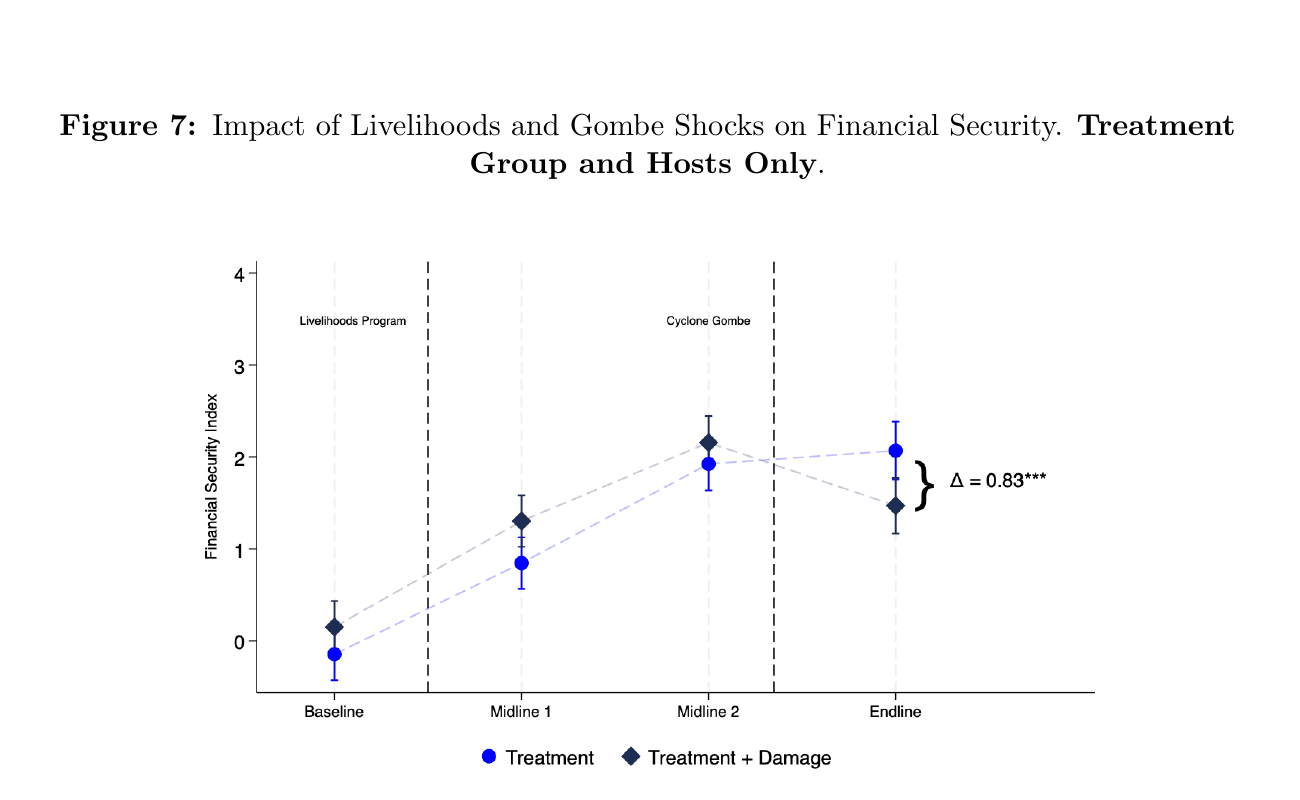
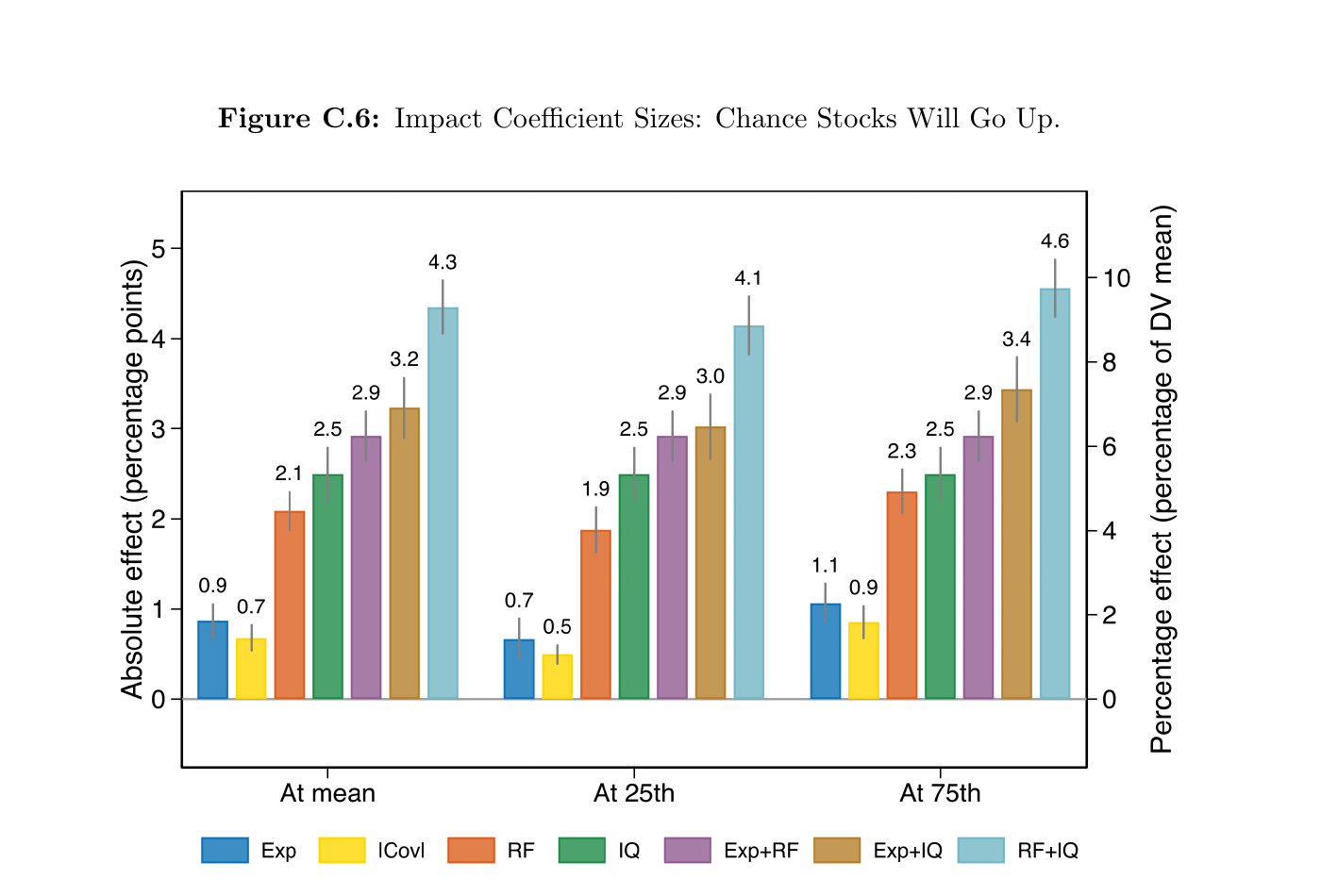
Figure 7 from the paper: financial security index over four survey waves, with separate trajectories for treated households damaged versus undamaged by Cyclone Gombe.
Fig. 7. Impact of the Livelihoods Program and Cyclone Gombe on financial security. x-axis: survey wave (Baseline → Endline). y-axis: Financial Security Index (z-scored against the control group). Series compare treated households exposed to cyclone damage with treated households that were not. Δ = 0.83 SD gap at endline.

Recall Fluency: A Cognitive Source of Belief and Choice Heterogeneity

with Pedro Bordalo, Nicola Gennaioli, and Andrei Shleifer. Working Paper.

Abstract: We study how memory shapes belief formation about macroeconomic and personal events. Using data from the Health and Retirement Study, we link individual performance on standard laboratory word recall tasks—a measure we call recall fluency—to expectations about stock returns, housing prices, and life expectancy. We find that recall fluency strongly predicts both the level and volatility of beliefs across domains. We develop a model of selective memory in which higher recall fluency amplifies the influence of domain-specific experiences on beliefs, increases sensitivity to current signals that match past experiences, and strengthens the role of normatively irrelevant experiences such as childhood health and socioeconomic status. Our findings establish memory capacity as a stable individual trait—akin to risk aversion or patience—that generates substantial heterogeneity in beliefs and economic behavior.

Presented at: Bayes Business School.

Figure C.6 from the appendix: bar chart of impact coefficient sizes for the subjective probability that stocks will go up, evaluated at the sample mean, 25th, and 75th percentiles, broken out by experience, recall fluency, IQ, and their combinations.
Fig. C.6. Impact coefficient sizes for the belief that stocks will go up. x-axis: evaluation point (sample mean / 25th / 75th percentile of the non-focal regressors). y-axis: percentage-point change in the belief from a P25→P75 move in the named regressor (right-hand axis re-expresses it as a share of the dependent-variable mean). Bars: experience, recall fluency, IQ, and their pairwise combinations.

Price Norms and Consumer Behaviour

with Pedro Bordalo, Mattia Nardotto, and Sandra Sequeira. Working Paper.

Abstract: We study how memory shapes consumer valuation of prices. When consumers evaluate a price, they compare it to a norm retrieved from past experience: a large discount is attractive partly because it contrasts with remembered higher prices, while a modest increase goes unnoticed if close to the norm. We bring this model to data using transaction records from a large UK retailer, exploiting exogenous variation in prices to identify the causal role of past price experience on current demand. We find that consumers' price sensitivity depends strongly on their personal price history, consistent with memory-based reference dependence.

Presented at: Harvard Department of Economics.

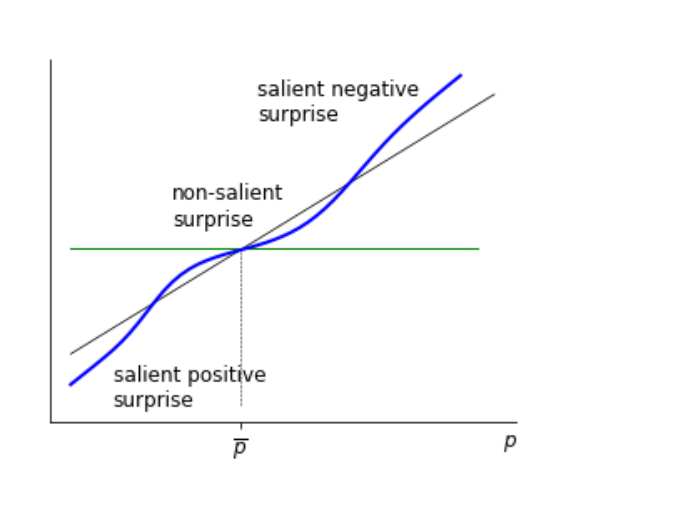
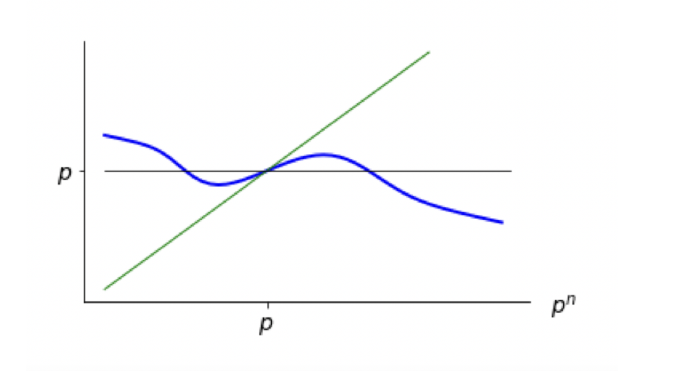
Schematic plot showing valuation as an S-shaped function of the gap between a price and its norm: small deviations from the norm are absorbed, large deviations are over-weighted. Schematic plot showing valuation as a non-monotonic function of the cued reference price: contrast effects raise valuation when the cue is far from the actual price, assimilation effects lower it when close.
Fig. 1. Left — the role of attention. x-axis: price p, with norm marked. y-axis: valuation. Small deviations from the norm are absorbed; large deviations are over-weighted (S-curve).
Right — cues and the instability of valuation. x-axis: retrieved reference price pn. y-axis: valuation. The relationship is non-monotonic: cues that retrieve high reference prices raise valuation through contrast (σ > 1) but can depress it through assimilation (σ < 1).

Publications

Long Term Expectations and Aggregate Fluctuations

with Pedro Bordalo, Nicola Gennaioli, Rafael La Porta, and Andrei Shleifer. NBER Macroeconomics Annual, 38(1):311–347, 2024.

Abstract: We use analysts' long-term earnings growth (LTG) forecasts for S&P 500 firms to measure aggregate expectations and study their role in macro-financial fluctuations. LTG forecasts are excessively volatile and systematically disappointed: high LTG predicts both predictable forecast errors and low future stock returns, contradicting rationality. Holding required returns constant, an expectations-based price index built from LTG accounts for the bulk of post-1980 stock-market volatility and resolves Shiller's excess volatility puzzle. The same beliefs help explain financial and real co-movement: higher LTG predicts near-term increases and longer-horizon declines in interest rates, the reverse pattern for credit spreads, and investment booms that revert as optimism is disappointed. LTG also forecasts consumption, employment, and wages, with Granger causality running from expectations to the macroeconomy. Together, the evidence indicates that nonrational fluctuations in long-term beliefs are a quantitatively important driver of aggregate financial and real volatility.

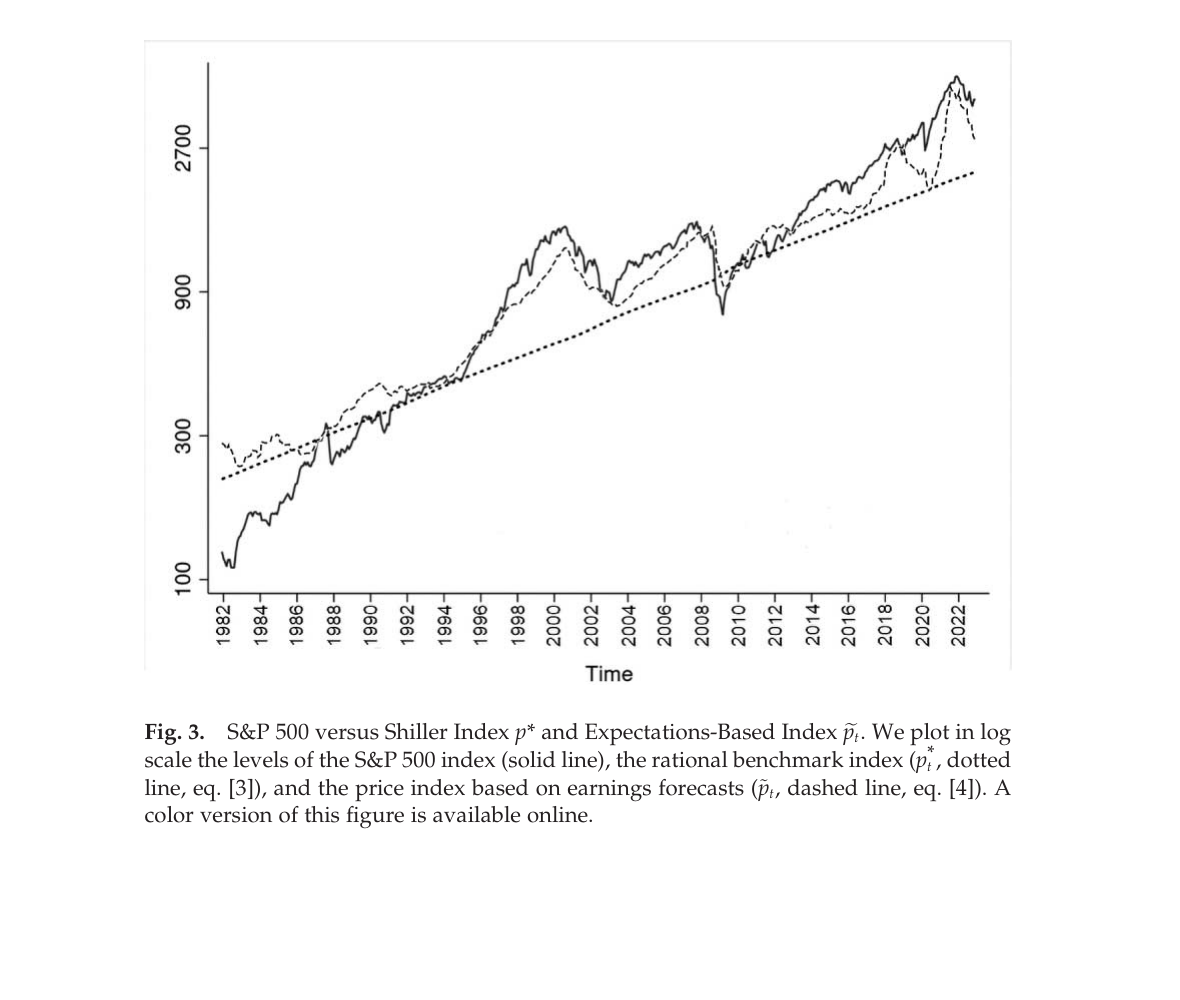
Figure 3 from the paper: log-scale plot of the S&P 500 index against the rational benchmark and the earnings-forecast-based price index, 1982–2022.
Fig. 3. S&P 500 versus Shiller Index p* and Expectations-Based Index . We plot in log scale the levels of the S&P 500 index (solid line), the rational benchmark index (p*, dotted line, eq. [3]), and the price index based on earnings forecasts (, dashed line, eq. [4]). A color version of this figure is available online.

Works in Progress

Learning About Community Needs

Project team: Nava Ashraf, Carmen Pegas, Akash Uppal, and Neha Verma. Preliminary field work ongoing.

We investigate how communities in Zambia learn about and articulate their own development needs, and how those needs translate into funded proposals under the country's Constituency Development Fund. The 2024 Constituency Development Fund Act requires that funded projects align with locally-authored Integrated Development Plans, making the gap between articulated need and funded project a question of statutory compliance as much as policy design.

Changing Narratives: AI-Assisted Reframing for NEET Youth

Project team: Nava Ashraf, Oriana Bandiera, Bennet Feld, Jerry Lin, and Christiane Szerman. Pilot ongoing.

Working with the UK Department for Work and Pensions, we develop and test an AI tool that helps young people who are not in employment, education, or training (NEET) reframe their past experiences and rewrite the narrative around themselves as workers. The tool targets the framing gap that work coaches in Jobcentres frequently encounter — young people who cannot see how their past connects to a contribution they could make at work — alongside the more familiar skills gap.